
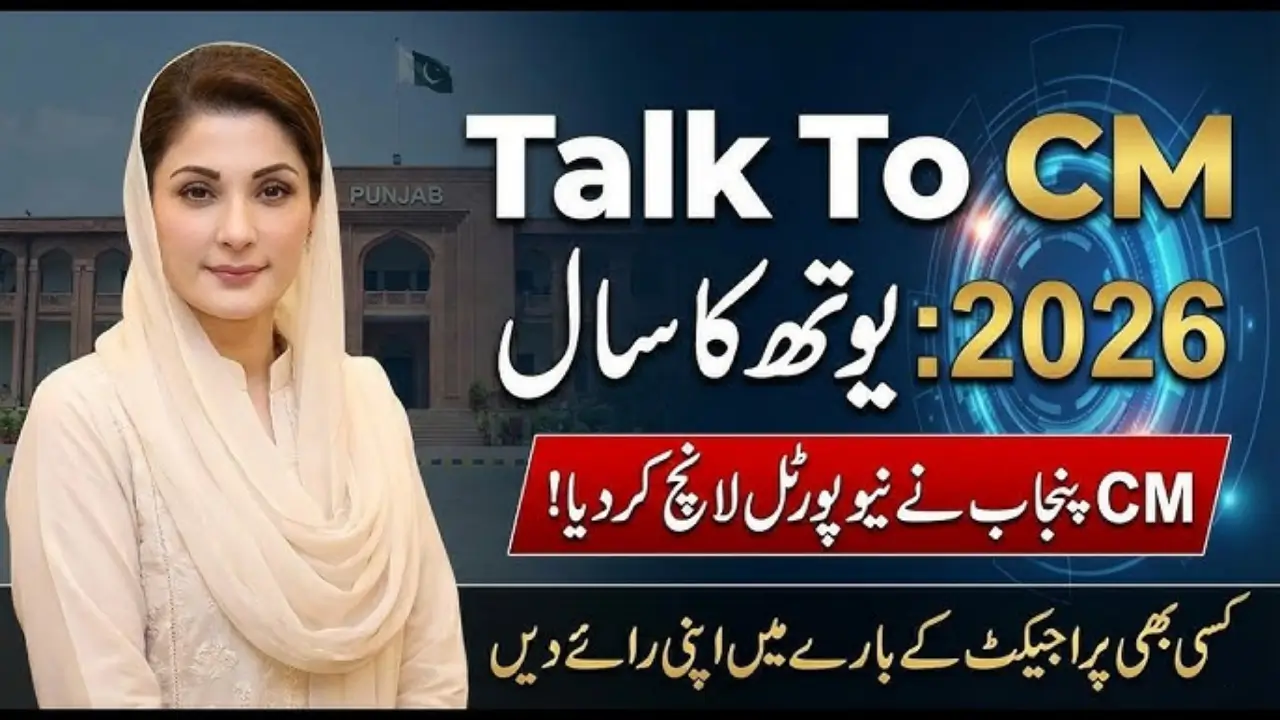
The Talk 2 CM Portal is presented in the linked article as a modern platform designed to change the way citizens interact with the Punjab government. Rather than limiting public engagement to traditional complaint channels, the portal is described as a space where people can directly share ideas, suggestions, feedback, and proposals with the Chief Minister’s Office. The page says the platform was launched in February 2026 and connects it with the Year of Youth 2026 initiative. Its broader message is that governance should not remain one-directional. Instead of the government only issuing decisions from above, the public should also have a clearer route to contribute to policy thinking and administrative improvement.
One of the article’s most important themes is that the portal is meant to encourage participation rather than just complaint filing. The source draws a distinction between simply reporting a problem and actively contributing ideas that can improve governance. That is what makes the initiative sound more ambitious than a standard helpdesk system. It is described as a platform for collaboration and innovation, giving citizens a more direct voice in the way services and policies are shaped. The article even frames it as a step away from top-down governance and toward a more inclusive, citizen-driven model where public input is treated as a useful resource instead of an afterthought.
The page also emphasizes inclusiveness. According to the article, the portal is open to students, professionals, business owners, and even overseas Pakistanis with roots in Punjab. That broad target audience suggests the government wants varied perspectives rather than feedback from only one type of user. The source places special attention on youth engagement, saying younger people are encouraged to share fresh ideas and practical solutions that could improve governance and public services. This youth focus fits with the article’s larger theme that digital tools can create new forms of civic involvement, especially for younger generations who are already comfortable communicating online.
Another strong point in the article is the platform’s simplicity. It says users can quickly submit suggestions for improvement, policy ideas, community development proposals, and feedback on government services. The process is described in a straightforward sequence: visit the official website, register or log in, submit your idea or feedback, receive a tracking ID, and then monitor progress through that ID. The inclusion of tracking is especially important because it brings an element of transparency and accountability. A submission that disappears into a black box does not build trust, but one that can be monitored gives users a clearer sense that their input has at least entered a visible process.
What gives the portal its broader significance is the article’s political and administrative framing. It presents the system as part of a more responsive style of governance, where communication barriers are reduced and citizens can reach leadership without middlemen. Whether that promise is fully achieved in practice is something time would determine, but the article clearly wants readers to see the portal as a meaningful shift in tone and structure. It repeatedly ties the portal to transparency, accountability, accessibility, and innovation. Those are big claims, but they reflect the kind of public expectation such a platform is meant to generate.
In the end, the linked article portrays the Talk 2 CM Portal as a symbolic and practical attempt to bring government closer to the people. It is not just described as a website; it is framed as a new channel for public voice in Punjab. For citizens who often feel distant from decision-making, even the existence of a structured digital route for sharing feedback can feel important. And for a government trying to signal openness, such a platform becomes both a communication tool and a political statement about how governance is supposed to work in a more connected age.