
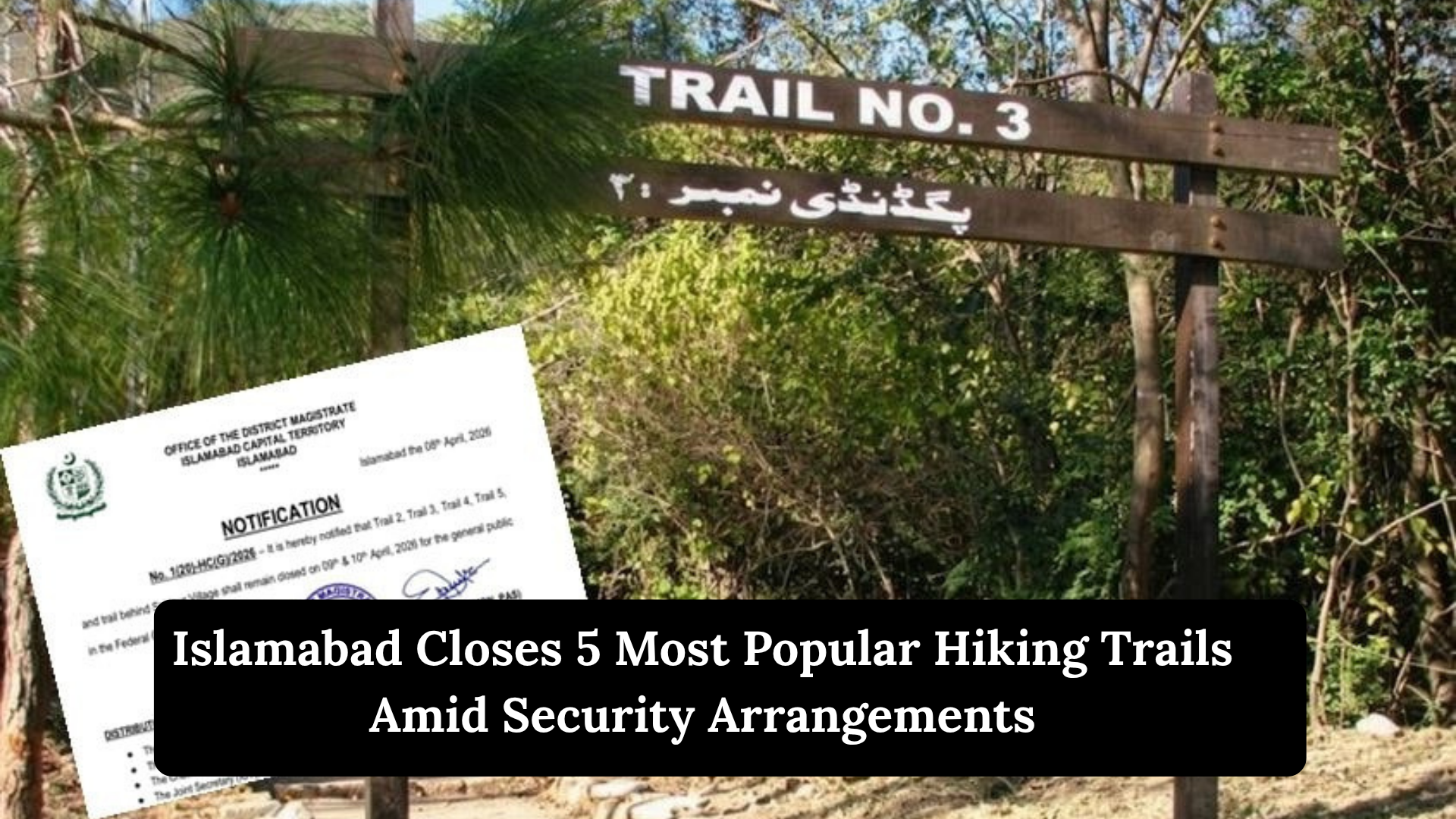
The linked article explains that Islamabad temporarily shut down several of its best-known hiking routes because of heightened security arrangements in the capital. According to the page, the order came from the District Magistrate’s Office and took effect after an official notification dated April 11, 2026, with closures starting from April 12. The affected routes include Trails 2, 3, 4, and 5, as well as the connecting path between Trail 5 and Saidpur Village. The article presents the decision as significant because these are some of the most frequently used outdoor spaces in the city, attracting residents, tourists, students, and regular fitness groups.
A major focus of the article is how central these trails are to Islamabad’s public life. The page describes them as some of the city’s most attractive recreational spots, located in the Margalla Hills and known for fresh air, scenic views, and relatively accessible hiking paths. Trails 2 through 5 are singled out as especially popular because they are familiar, well-marked, and widely used by people seeking exercise or a break from city life. That makes the closure feel larger than a simple administrative restriction. It affects everyday routines for many people who rely on these routes for health, leisure, or social activity. The article notes that a large number of regular visitors were directly impacted once the closure took effect.
The source says authorities did not provide a detailed public explanation, but the article links the move to heightened security measures in Islamabad. It suggests that the closures are connected to sensitive diplomatic activity and broader administrative requirements in the city. The page also notes that Islamabad has often imposed temporary restrictions on public spaces during high-level national or international events to preserve order and reduce security risk. In this case, the article frames the trail closures as precautionary rather than permanent, aimed at helping authorities manage a delicate situation in the capital while important diplomatic developments are ongoing.
Another part of the article looks at the wider impact beyond hikers themselves. It points out that Islamabad’s trails are also part of the city’s tourism appeal, especially for visitors who want to experience the natural beauty of the Margalla Hills. With the trails temporarily off-limits, the page says tourism activity in those areas is likely to slow down. It also mentions that local guides, small vendors, and others who benefit from steady foot traffic could feel the economic effect. This broadens the issue from public inconvenience to a short-term disruption for a small but active local ecosystem built around outdoor movement and weekend visitors.
The article also emphasizes the role of the district administration. It says the District Magistrate’s Office took the decision as part of its responsibility for maintaining law and order in the capital, likely in coordination with other security and administrative bodies. Citizens were urged to cooperate, avoid the restricted trails, and wait for further notice before returning. The page adds that other recreational areas in Islamabad remain open, which softens the closure somewhat, but it still makes clear that access to these specific routes has been suspended until the situation stabilizes. That framing suggests the government sees the decision as temporary but necessary under the circumstances.
Overall, the linked article presents the trail closure as an example of the tension between public freedom and security priorities. On one hand, these hiking paths are a beloved part of life in Islamabad. On the other, the article argues that unusual circumstances in the capital can justify short-term restrictions when officials believe safety and order are at stake. Its tone is ultimately reassuring: while the closure has disappointed many hikers and residents, the expectation is that normal access will return once the sensitive situation passes. Until then, the article frames cooperation as part of the public’s role in helping the city manage a high-security moment responsibly.