
Introduction
The article reports that the Economic Coordination Committee of the federal cabinet has approved Technical Supplementary Grants worth Rs. 5.1 billion for several national priorities. It presents the decision as an important government move aimed at supporting public health, education, and security-related needs without delay. The page frames this funding package as a sign that the government wants key sectors to keep functioning smoothly instead of losing momentum because of budget gaps or administrative slowdowns. From the very beginning, the article treats the grants not as isolated numbers, but as a broader package connected to public welfare and national development.
The Largest Share Goes to Vaccination
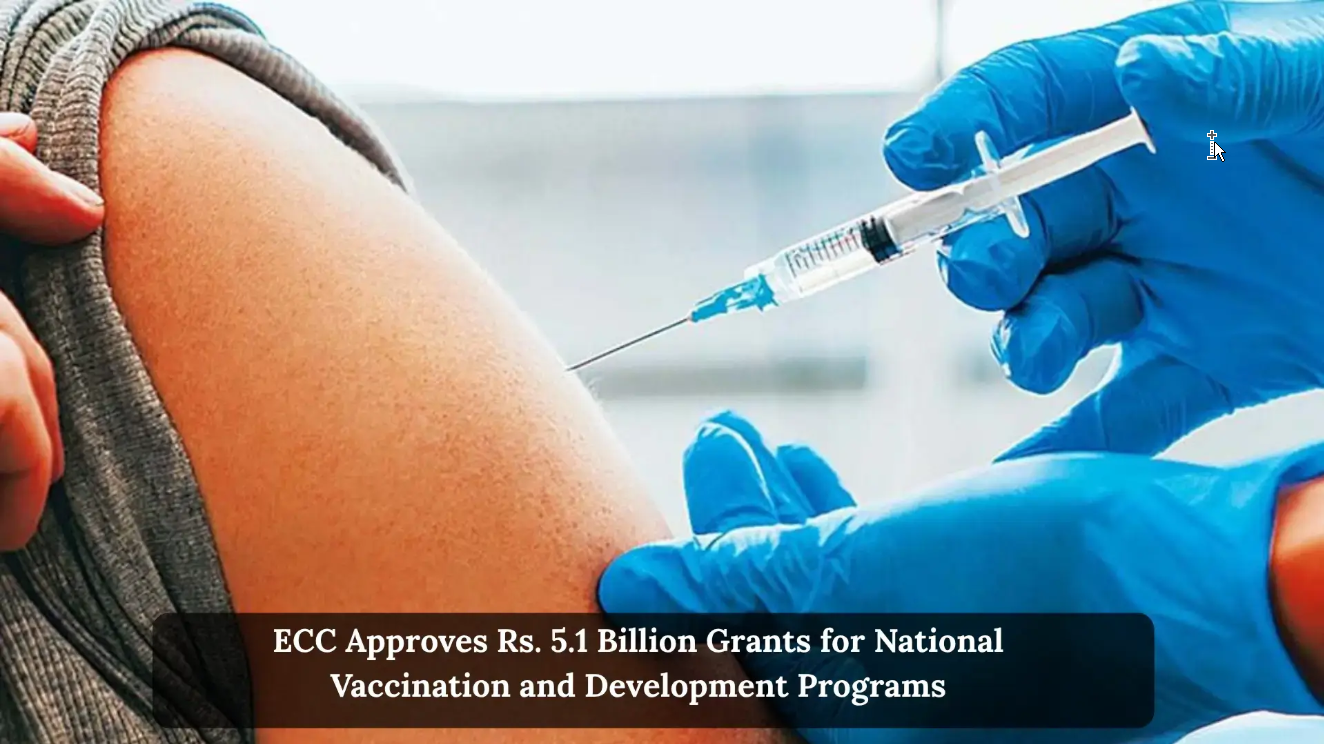
According to the article, the biggest part of the approved grants, Rs. 2.8 billion, has gone to the Federal Directorate of Immunization. The purpose of this allocation, the page says, is to support a large vaccination campaign targeting more than eight million children across Pakistan. This instantly makes immunization the central theme of the article. The page explains that the funding will help protect children from serious diseases and will support the continuity of routine immunization services. It also notes that the money will be used for vaccines, syringes, and other essential supplies, which suggests the government is focusing on both coverage and operational readiness.
Why Vaccine Supply Systems Matter
The article does not stop at vaccine purchases. It also places strong emphasis on supply systems and logistics. It says the ECC highlighted the importance of pooled procurement, which can reduce costs and help ensure vaccines are available on time across the country. In addition, the article mentions investment in the Cold Chain Equipment Optimization Platform, or CCEOP, to make sure vaccines stay at the correct temperature during storage and transport. This is an important detail because vaccines can lose their effectiveness if they are not handled properly. By including this, the article tries to show that the government’s decision is not only about buying products. It is also about protecting the full chain that allows those products to remain usable and effective.
Coordination With Provinces
Another point the article highlights is coordination between the federal government and provincial governments. It says the vaccination campaign will be implemented in close cooperation with the provinces so that execution remains smooth and national coverage can be maximized. This matters because public-health programs often fail not because of a lack of announcements, but because implementation across different regions becomes uneven. The article seems to recognize that challenge. By mentioning coordination directly, it gives the impression that the government is trying to avoid fragmentation and make sure the campaign reaches children in all parts of the country rather than remaining concentrated in a few better-served areas.
Additional Funding for Education
The article also reports that the ECC approved Rs. 2 billion for the Federal Education and Professional Training Division. According to the page, this amount will be arranged through adjustments within the Public Sector Development Program. While the article does not list every project in detail, it says the funding is expected to support education infrastructure, capacity building, and quality improvements. This broadens the meaning of the overall grant package. It is not limited to urgent health spending. It also includes support for long-term development through education, suggesting that the government wants to balance immediate needs with future national progress.
Support for the Airports Security Force
Beyond health and education, the article says the ECC also approved Rs. 306 million for the Airports Security Force. The page explains that this money is intended to meet operational expenses and obligations under the Prime Minister’s Assistance Package. In practical terms, the article frames this as support meant to help the ASF continue performing its duties effectively and maintain airport security. This section adds another dimension to the funding story by showing that the grants are not only about social services, but also about keeping national systems functioning properly where safety and operations are concerned.
Amendments to Import Policy
The article also notes that the ECC approved amendments to the Import Policy Order 2022 concerning the import of areca nuts, commonly called supari. It says the new rules include pre-shipment inspections and stronger regulatory checks so imported products meet food safety standards and comply with national requirements. This detail may seem smaller than the vaccination or education grants, but it still fits the article’s wider theme of tighter governance and more careful oversight. In that sense, the article portrays the ECC meeting as more than a money-approval session. It also presents it as a policymaking forum where regulation, public safety, and administrative control are being shaped at the same time.
Conclusion
Overall, the article presents the Rs. 5.1 billion grant approval as a broad package aimed at protecting public health, supporting education, maintaining essential security functions, and improving regulatory control. The strongest emphasis remains on vaccination, especially the effort to reach over eight million children and maintain reliable cold-chain logistics nationwide. At the same time, the funding for education and airport security shows that the ECC’s decision was not limited to one sector alone. The final impression left by the article is that the government is trying to combine immediate welfare needs with longer-term national stability and development.