
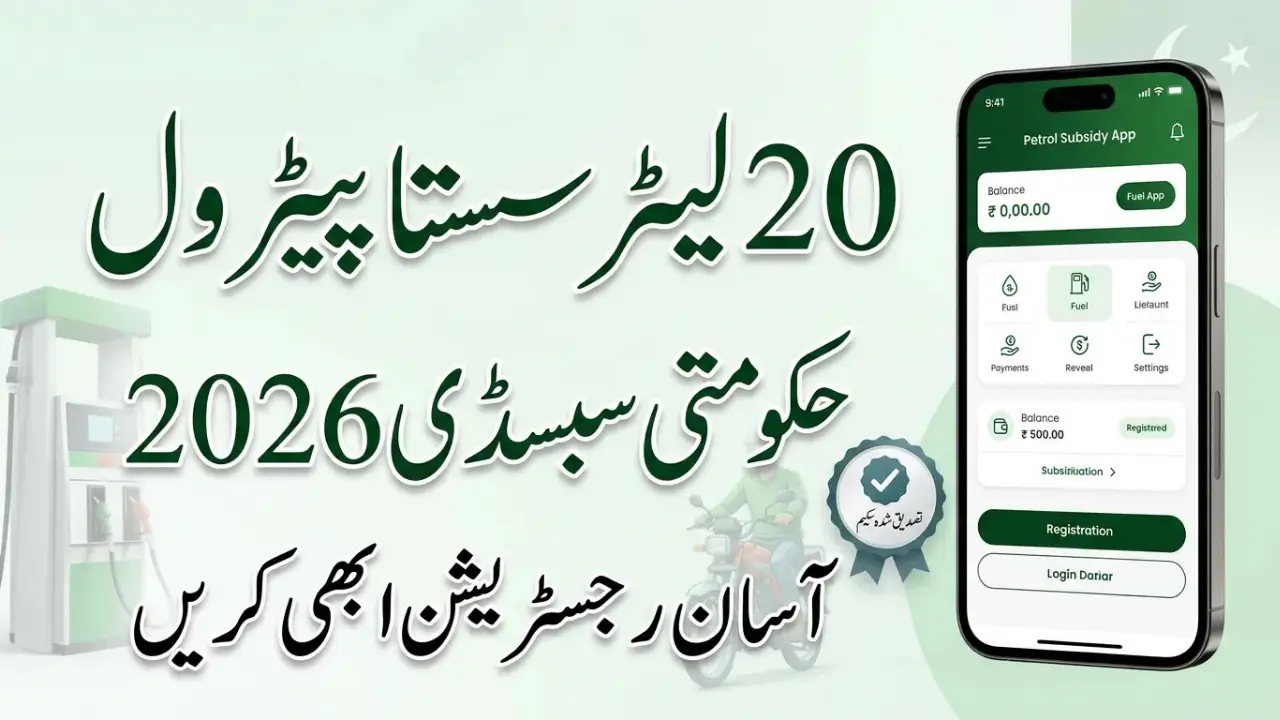
The idea behind a petrol subsidy app is easy to understand because it speaks directly to one of the most painful costs for ordinary households: fuel. When petrol prices rise sharply, the effect goes far beyond private car owners. It hits motorcycle riders, rickshaw drivers, delivery workers, small transport operators, and families whose daily income depends on movement. The linked article presents the Pakistan Petrol Subsidy App 2026 as a digital response to exactly that pressure, describing it as a CNIC- and vehicle-linked platform meant to deliver targeted fuel relief to low-income users. Recent reporting has also described a new app-based or digitally managed process for fuel subsidy access, particularly for motorcycle owners and province-based registration systems, although rollout details appear to be evolving across sources.
According to the source page, the app is designed for motorcycle riders, rickshaw drivers, and small car owners, with eligibility tied to verified identity and vehicle records. It says the system uses CNIC data, registered mobile numbers, and vehicle details to make sure subsidies go to the intended users rather than being broadly or informally distributed. That is a major part of the article’s message: the scheme is being framed not just as relief, but as smarter relief. Instead of blanket subsidies that leak value everywhere, a digital app promises targeted delivery, cleaner data, and tighter control.
The most eye-catching features described on the page are the monthly fuel quota, digital vouchers, and QR-based redemption. The article says users may receive a monthly subsidized quota in the range of 20 to 30 liters, generate QR vouchers inside the app, and use those vouchers at approved petrol stations. It also claims the system is designed to track usage in real time and prevent misuse once a monthly limit is exhausted. In theory, that is exactly the kind of digital architecture governments like to build around subsidy programs: verification on the front end, controlled consumption in the middle, and auditable records at the end.
The article also tries to make the case that this model is more transparent than older subsidy systems. It says a digital app reduces middlemen, prevents black marketing, and makes distribution fairer because the benefit is tied directly to the eligible user. That framing is important because fuel subsidy programs often face criticism for waste, leakage, or political misuse. A QR- and CNIC-linked design is meant to answer those concerns by making every subsidized liter traceable. Whether the real system performs that smoothly is something implementation would decide, but the logic behind the proposal is easy to see.
At the same time, this is the kind of scheme that depends heavily on rollout quality. The linked page presents a large network of participating pumps and says the app would work nationwide, but recent reporting suggests that subsidy mechanisms may differ by province and may still be in rollout or registration stages in some places. That means people should treat summary articles as useful overviews, not as the final word on where, when, or how they can claim the benefit. When public relief programs are new, the most important details often change during implementation.
Even with that caution, the broader idea is compelling. A well-run petrol subsidy app could give real breathing room to households that rely on two-wheelers and small vehicles to earn a living. It could also make fuel relief more targeted, more measurable, and less vulnerable to abuse than older blanket subsidy models. That is why the concept is getting so much attention. At a time when fuel costs shape transport, delivery, work, and household budgeting, even a modest monthly subsidy can feel significant. The real test, as always, will be whether digital convenience on paper turns into reliable relief on the ground.