
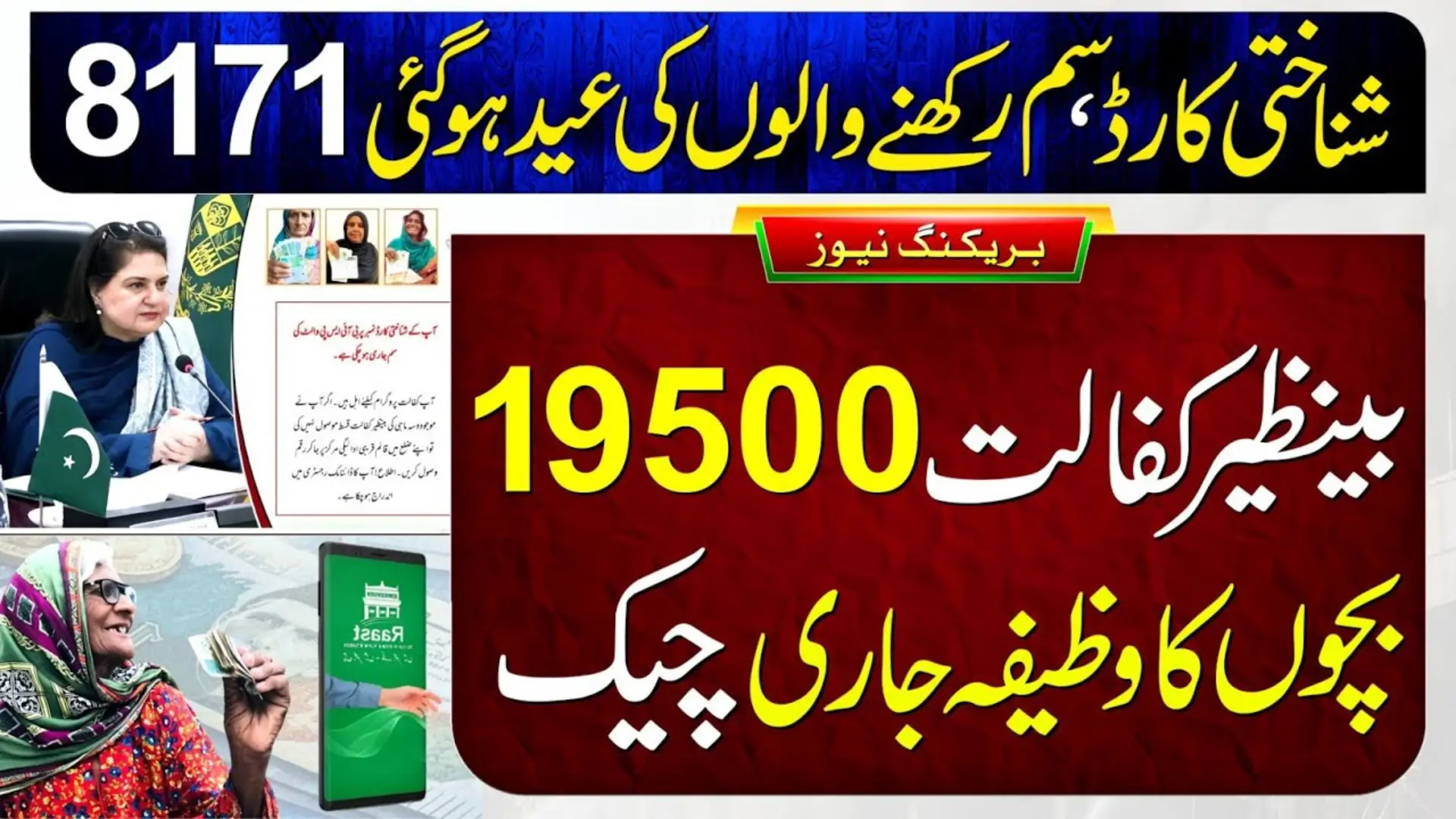
The linked article explains that a lot of confusion exists around the much-discussed Rs. 19,500 BISP amount. Many people hear the figure and assume it is a fixed payment being given to every beneficiary, but the page makes it clear that this is not the case. Instead, it presents the amount as a possible combined total that may include the regular Benazir Kafalat installment, education-related support under Benazir Taleemi Wazaif, and in some cases previously pending or missed payments. That means the full amount depends on the person’s actual record, category, and eligibility rather than applying equally to all recipients.
A big part of the article focuses on the children’s stipend portion of this update. It explains that Benazir Taleemi Wazaif is not random extra money, but a support mechanism tied to education. The purpose is to help poor families keep their children enrolled in school, maintain attendance, and reduce the chance that financial hardship will push children out of the classroom. In that sense, the payment is not only about temporary financial relief. It is also meant to support a longer-term goal by helping families continue their children’s education even when household budgets are under pressure.
The article also stresses that not every household will receive the higher combined amount. It says a person may qualify for more if their children are already registered under Taleemi Wazaif, if they had unpaid past installments, if their records were recently verified, or if they meet multiple eligibility conditions at the same time. This is an important point because many rumors spread when a large number gets mentioned publicly, and people begin to expect it automatically. The page repeatedly brings the discussion back to verification and specific circumstances, which helps explain why one beneficiary may receive more than another.
Another useful section of the source article outlines the basic eligibility framework. It says beneficiaries should belong to low-income households, have a valid CNIC, be included in the NSER survey, and not be government employees, while also falling within the required poverty criteria. The article presents women as the main recipients of this support, which fits the broader structure of BISP. It also suggests that keeping records current is just as important as initial registration, because outdated information can affect whether payments are processed smoothly.
The article then moves into the practical side of checking payment status. It says beneficiaries can send their CNIC number to 8171 through SMS, use the official online portal, or visit a BISP center if they face problems or need a data update. The distribution methods listed include payment centers, ATMs, retail agents, and mobile wallets, while biometric verification is described as mandatory before the money is released. This part of the article reads almost like a public guidance note, reminding people to rely on official channels instead of hearsay.
Overall, the linked page presents the Rs. 19,500 discussion as a misunderstanding that needs clarification rather than a brand-new universal payout. Its central message is that the amount can be real for some families, but only when multiple support elements apply to their case. By combining regular cash support with education-related assistance, the article frames the program as something broader than a single payment. It is presented as a welfare structure meant to help vulnerable households manage immediate needs while also supporting children’s schooling and future stability.